Starting a private practice often means doing a little bit of everything. You answer the phone, schedule appointments, manage the finances, and see clients. But as your practice grows, the habits that helped you get started can leave you overwhelmed. In this episode of The Practice of Therapy Podcast, Whitney Owens joins Gordon Brewer to discuss the challenges of letting go, building a dependable team, and becoming the leader your business needs. Drawing from her experience growing Water’s Edge Counseling and Wise Practice Consulting, Whitney shares how business ownership continues to stretch her professionally and personally.
Meet Whitney Owens 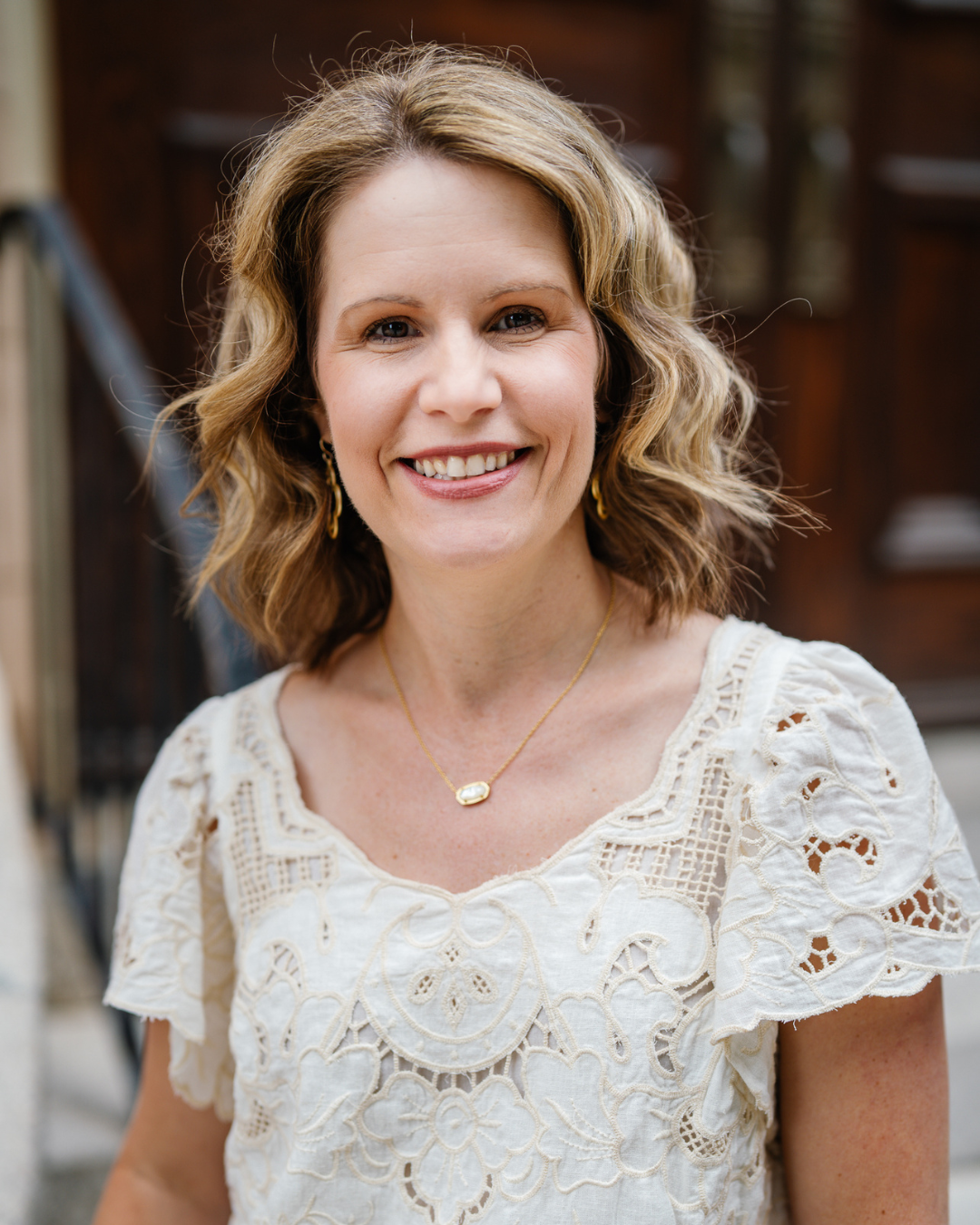
Currently, Whitney owns a thriving group practice in Savannah, Georgia, called Water’s Edge Counseling. When not running the practice, you can find her coaching, running, or drinking coffee while reading a book. She is married to a pastor and is the mother of two beautiful girls. She has walked the road of balancing work and family and continues to learn along the way.
As a graduate of Richmont Graduate University, she received training not only in professional counseling but also in faith integration. Over the years, she has worked in numerous clinical settings, from residential treatment to hospital work to opening multiple private practices. She is also the author of a Lent devotional for faith-based practice owners called The Practice of Becoming!
Now, she lives the lifestyle she loves, working 4 days a week, picking her kids up from school, and enjoying a profit in her business. She can do the work she loves, live out her faith, and have fun doing it!
Confidence Comes From Experience
Whitney’s path into private practice began with necessity. After losing a group practice position in Colorado, she joined colleagues in creating a collective. Later, when she moved to Savannah, Georgia, and struggled to find a job, she started Water’s Edge Counseling. Neither transition came with a clear sense that she knew exactly what she was doing. Confidence developed as she gained experience, worked through challenges, and learned how to run a business. Her story offers a useful reminder: feeling uncertain does not mean you are incapable of building something successful.
Invest in Your Own Development
One of Whitney’s most consistent investments has been in her own growth. Consultants, books, conferences, retreats, and professional relationships have helped her improve her approach to leadership, hiring, and marketing. Early in her solo practice, she set a simple goal: listen to one podcast each week and implement something she learned. That emphasis on application matters. Information becomes valuable when it changes how you handle a problem, support your team, or make a decision in your practice.
Recognize When You Need Help
For Whitney, delegating became necessary when she realized she could not keep carrying every responsibility and still build the business she wanted. Hiring her first assistant brought practical help with scheduling, along with someone who could listen, solve problems, and support the practice’s mission. The decision created room for Whitney to focus on work that needed her attention. For practice owners approaching that same point, it helps to notice which responsibilities consistently consume time and energy that could be spent leading the business.
Let Your Leadership Team See the Whole Picture
A bigger shift came when Whitney began building a leadership team and hired an integrator who functions as her chief operating officer. Bringing someone into that role required a level of transparency that initially felt uncomfortable. She shared the practice’s financial details, including her own compensation, and worried about how those numbers would be received. Instead, the conversation brought reassurance and a stronger working partnership. Giving another leader enough information to understand the business allowed them to take meaningful responsibility for its success.
Create Systems That Support Your People
Clear processes help a growing practice operate with greater consistency. Whitney highlights intake, therapist onboarding, hiring, and budgeting as areas that deserve attention. Her team is also developing an eight-session framework to give clinicians more guidance as they establish relationships with clients. The intention is to provide a foundation they can adapt, rather than a script they must follow word for word. Documenting what experienced team members already know can make that knowledge easier to teach and use throughout the practice.
Make Your Values Part of Hiring
Whitney’s hiring approach has changed as she has become clearer about her practice’s mission and values. She describes moving beyond assumptions about whether someone would be a good fit and paying closer attention to how they would contribute to the team’s culture. That transition has included significant staff turnover, which she discusses openly. Her experience shows why practice owners need to define and communicate expectations early. Clinical skills matter, and so does the way people collaborate, respond to feedback, and treat others.
Let Faith Shape an Approach That Welcomes Others
Faith influences Whitney’s leadership, but she also emphasizes meeting people where they are and welcoming different backgrounds. Over time, she has become more intentional about looking for qualities such as humility and compassion instead of assuming that a shared religious identity guarantees shared values. That perspective extends to Wise Practice Consulting, where she describes welcoming a Muslim practice owner into the community. For Whitney, supporting others means making room for their experiences while remaining thoughtful about her own beliefs.
Build Relationships Beyond Your Business
Practice ownership can feel isolating, especially when difficult decisions rest with you. Both Whitney and Gordon credit trusted professional friendships with helping their businesses grow. These relationships offer a place to share ideas, talk through challenges, and receive support from people who understand the responsibility of leading a practice. Whitney also describes learning to step away and rest during the events she hosts, trusting others to keep things moving. Having support matters most when you allow yourself to use it.
Make Room to Enjoy What You’re Building
Whitney closes with an invitation to have fun. Meaningful work comes with serious responsibilities, but there should also be room to enjoy your colleagues, pursue projects that interest you, and appreciate the community around your business. Growing a practice involves uncertainty, uncomfortable decisions, and risks that do not always work out. It can also create opportunities for connection and personal growth. Listen to the full conversation with Whitney Owens on The Practice of Therapy Podcast, and visit [Wise Practice Consulting](https://wisepracticeconsulting.com) to learn more about her work.
Gordon Brewer: Well, hello everyone, and welcome to the podcast.
And, this person that is on today is no stranger to this podcast. In fact, Whitney Owens did a podcast takeover s- a few years ago. I can't remember which year it was, Whitney, but glad to have you back. And Whitney is one of my closest friends and confidantes, and we meet regularly, and she's part of a mastermind group that I'm in, so welcome, Whitney, glad you're back.
Whitney Owens: Thank you, Gordon. Yeah, that was 2022- Wow ... that I did that podcast takeover because that was when I left one position and was trying to get started in my new one, and you were so gracious to give me your platform and super helpful to help me get going. So- Mm ... your friendship means a lot to me.
Gordon Brewer: That's, uh, that's hard to believe it's been that long ago already.
I mean, it's just, yeah, crazy how that goes. But for folks that don't know you Whitney is the mastermind behind Wise Practice Consulting, and also her, uh, wonderful practice, Water's Edge Counseling. And we're gonna be just talking about kinda her evolution and how she's done all of that in such a great way.
But Whitney, tell folks a little more about yourself and- how you've landed where you've landed.
Whitney Owens: Yeah. Boy, how do you put all that into one story? My husband told me I should do the parody Fresh Prince of Bel-Air to tell this story. You know how I am with parodies. Um, but I'm located in Savannah, Georgia, which is right on the coast of Georgia.
I came here about 14 years ago with my husband to do ministry here. He's a, he was a youth pastor. And I started Water's Edge Counseling when I moved here simply because I couldn't find a job, you know? And I- Mm-hmm ... applied for lots of places, and I was like, "I guess I'll start a private practice," and somehow it worked, and, uh, started doing cash pay, growing it.
Got to about 15 to 18 clients a week. Ended up having my second baby, took some time off, came back. It got right back to full again, and I was trying to raise young children, be a pastor's wife, and then I felt like the Lord was saying, "It's time to start hiring," right? I just felt this urge, and I was like, "Oh, goodness."
So anyway, but I did that too and started hiring, and now Water's Edge has 15 to 18 therapists, given the day, which we can talk about, Mm-hmm ... what that's like and what I've learned about hiring. And we're all private pay, two locations. I'm actually moving into my commer- second commercial building this weekend.
So it's- Wow ... kind of a-
Gordon Brewer: Congratulations ... very- Yeah ...
Whitney Owens: yeah, serendipitous time for you to be like, "Let's tell your journey," and I'm like, "Oh, the journey." Um, and then a few years back, um, back in 2018, I started, then going into '19, I started doing business consulting. I had wanted someone that had kind of an expertise within faith-based businesses, 'cause I feel like my faith influences the way I run my business.
Um- Mm-hmm ... and I couldn't find a consultant doing that. And again, I just felt the strings on my heart pulling me to start doing that work, so I started, uh, consulting faith-based practice owners, uh, through another organization, and then in 2022, '23, I started Wise Practice Consulting, and has, have been going from there.
I have several consultants that work for me, a membership community, and a podcast thanks to you, Gordon. You kept kicking my butt. And so I did a podcast- Yeah ... and it really does help, and so I have the Wise Practice Podcast as well.
Gordon Brewer: Yeah. It's, uh, it's amazing, uh, being on the sidelines from when Whitney and I met oh gosh, it was what, 2019?
Somewhere around then- '18 ... or '18. Wow. Yeah, we met-
Whitney Owens: April 2018.
Gordon Brewer: Yeah, and so we ha- we had gone to a, a retreat together that was, uh, about private practices, and just struck up a friendship, and it just, uh, I don't know what, uh, what it was, but we've just maintained our friendship since then. But, um, yeah, y- you know what?
I guess one question I, I would have for you, Whitney, is, As you've gone through this process of starting a private practice, and you had a private practice too in Colorado, if I recall- Yes ... before you moved to Savannah, and it was more of a solo practice from what I remember with your story, and then coming to Savannah and starting fresh It, was there a point, there's probably several touch points, but what were some of the points at which you felt like, "Okay, this is starting to click for me.
This is what I'm realizing is working"?
Whitney Owens: Oh, good question, Gordon. So when I was in Colorado, I worked at a group practice, and she fired us all in one day. She called it Bloody Monday.
Gordon Brewer: Mm, gosh. Mm-hmm. Pardon the term, right? Mm-hmm.
Whitney Owens: And then we all jumped and started our own practice within a week, but I had to start my own, um, with this group.
So we were kind of like a collective. And I will say that I didn't really feel like anything clicked, like it felt like a cluster, and I just had to do it. I loved the work I was doing, but I didn't know how to run a business or anything. Then when I came to Savannah, it felt a little similar in the sense of I couldn't find a job, so I just had to start it, and I didn't really know what I was doing, and it didn't feel good then either.
I think there's an element that private practice always feels like a little off or a little unsure, like that's just part of life. Nothing in life feels settled. Mm-hmm. But I also think you can learn as you go, and I, I think I really felt good about being a solo practice owner probably a year in, maybe two- Mm-hmm
once I moved to Savannah. And then starting a group practice, right, that's a whole new hurdle, but probably when I got to about 7 to 10 therapists, when I was like, "I really do know what I'm doing." Like I used to think I had no idea what I was doing. I really do know what I'm doing. So I'd say those are the moments where I realized that I kind of know something, but I'm always learning, right?
Yeah. There's always moments where I'm like- Right ... "What am I doing here?" But yeah.
Gordon Brewer: Yeah. So what were some of the things that you put in place that really made it just really run smoothly?
Whitney Owens: Mm. I think the most important thing was investing in me, like- Mm ... investing in me and my business. And I remember so much early on, I mean, I've had consultants almost the whole time, like in different reasons and ways, different things I'm working on, if it's leadership development, hiring, marketing, whatever that is.
So that, and then I spent a lot of time reading books, attending conferences, going on retreats, meeting people, and just getting outside of myself. Mm-hmm. Getting all the knowledge that I could get to implement. I remember when I was s- new in my solo practice, I told myself, "I need to listen to one podcast a week, and then actually try to implement the one thing I learned."
So-
Gordon Brewer: Mm-hmm ...
Whitney Owens: that, that has helped things kind of click and put things in place along the way. But also the team. I think putting a team- Mm-hmm ... in place that you can really count on for everything, like count on them to do the job they're gonna do, count on them to listen to you when you need to like spout ideas and get the extra support, count on them when you are sick or need to go on a vacations, that people are there- Mm-hmm
helping you.
Gordon Brewer: Yeah. Yeah. It's a, yeah, and I know, um, kn- knowing Whitney as I know her, um, that was probably a big jump is l- letting, letting go of the control of and letting other people do the things that you are used to doing and doing in your way. You want to say something about that and how you navigated that?
Yeah.
Whitney Owens: Yeah, certainly. I think you do get to a point of desperation. Like- ... this is just too much for me to do on my own, and if I- Mm ... want this to grow and if I want to impact more lives, the only way I'm gonna be able to do that is to get help or I'm gonna burn out and be so unhappy. Mm-hmm. My first assistant that I hired in my group practice was fortunately someone that applied for the job that I knew from college, so that helped me a little bit, but she was game changer.
I mean, she was scheduling more clients, and she was a big support to me on a spiritual level. Like, I knew she was praying for the practice, and I knew that she would listen to my concerns, and she would game sk- you know, solve problems with me, game plan with me. Uh-huh. That was a big part of it. And the other really big jump I made with leadership was about a year and a half, two years ago, I started really creating my solid leadership team for my group practice.
I got into traction, EOS, and I hired a in- my integrator, which is basically my COO, Hunter. I finally had to basically let someone know every inch of my practice. Like, I had to sit, show him the numbers. I remember being so anxious showing him the numbers. Here's what I actually pay myself. Here's why we pay the therapists the way they do.
And I was ready for the judgment to come, right?
Gordon Brewer: Uh-huh.
Whitney Owens: And he was like, "You're doing great." He was so impressed. Yeah. It's like-
Gordon Brewer: Wow ...
Whitney Owens: like a relief. And so now I've got someone- Mm-hmm ... by my side who basically is like me and- Mm-hmm ... except in all the good ways. So we- ... partner very well, like the yin and the yang, and man, it has made such a difference in the business, and we are able- Mm-hmm
to accomplish so much more together.
Gordon Brewer: Yeah. Yeah. That's great. That's great. Yeah, and I think I, I totally agree, and I think that's really a- as we call it, the low-hanging fruit for any practice to scale, is to be able to offload what you as the owner of the business that you're, uh, the- practice owner do every day in and day out.
And in the beginning stages, I think it's good to learn all of those things, but you can't, you c- there's no way you can sustain that if you're gonna continue to grow.
Whitney Owens: Yeah.
Gordon Brewer: Yeah.
Whitney Owens: Yeah, most definitely. And I even have seen that Wise Practice is certainly a different kind of business. Mm-hmm. But I've had to experience it there too, and I actually would probably say it's been a little harder on that business because it's different, and the work I do, and higher level, I guess, in a way- to be able to trust other people with it. Challenging. Mm-hmm. But, um, it's the only way- Right ... I've been able to grow our community, um, 'cause I just can't be the touchpoint for everybody.
Gordon Brewer: And one of the things that, too, that Whitney has done with just, uh, building not only a, a, a wonderful practice, but also with her consulting with Wise Practice, she's got a, a really kind of a, to me, a landmark summit that she puts on every year, and it just came out of her passion of just really enjoying those kinds of things.
And so how do, how has all of that evolved for you as far as doing the summit? As a matter of fact, as, uh, I believe as this episode coming out, we'll probably be at your summit in Nashville this year, so yeah.
Whitney Owens: Okay. Cool. Yeah. Well, um, that's really exciting, yeah. So it certainly has evolved, and now that we're getting to the time of the summit, I've been doing a lot of reflecting, um, 'cause this is year five, Gordon.
Gordon Brewer: Wow. Wow.
Whitney Owens: And you, you've been there every year, so- Yeah I have learned so much about being a leader-
Gordon Brewer: Mm-hmm ...
Whitney Owens: through hosting the event, and really learning how to take care of myself while at the event, because a long time I'm just constantly there for everybody, and learning that take some time out, trust other people to run the event for you, and the importance of having a really organized plan.
Gordon Brewer: Mm-hmm.
Whitney Owens: And just keep doing the same thing over and over. Yeah. Like, I think a lot of times we feel like as entrepreneurs we need something unique and different and fun, but actually some of the magic is letting things just flow within your system, and then that's gonna create space in your brain to think about other things and not have the stress weighing on you so much.
But talk about having to trust people. I have people I have to trust to put this event on, and I go to my room and I rest while they're doing things. So that's always really interesting, but- ... I certainly have grown a lot as a leader. And, and I think this kinda goes hand in hand, what we were kinda talking about before we got on the show is I really truly believe that our business is what transforms us, right?
Mm-hmm. Like, we... If you've got insecurity, it's gonna come out when you run your practice. Mm-hmm. If you have insecurity and you host an event with 100 people, get ready 'cause it's gonna be coming out. Mm-hmm. You're gonna see the things, you're stressed, you're in front of everybody. But it also has allowed me to really grow as a leader, to know my boundaries, to depend on other people, and I think that's such a beautiful thing, and the only way you can scale and grow your business is to figure those things out.
Mm-hmm. And if you don't, if you run away from them, you're never gonna be able to grow the way you want. That awareness is key.
Gordon Brewer: Yeah. It's a... Yeah. And it's a, it's a really kind of a, a process of surrendering some things, which is- Yeah ... yeah.
Whitney Owens: Yeah.
Gordon Brewer: Yeah. Which is-
Whitney Owens: And of course, you know this, like, I think that we can have people, like, in our business, right?
Alongside us helping us. Yeah. But having friends. You- Yeah ... and Uriah and Allison and other, like, good friends that come to the event that support me, that's just what we do for one another.
Gordon Brewer: Mm-hmm.
Whitney Owens: And when you have that, there's such a security there, and it's, it's just, I can't say enough about it.
I think as business owners we've got to have people that are our good friends in business-
...
Whitney Owens: Or we're gonna flounder.
Gordon Brewer: Yeah. I totally agree. It's all about building community and networking with people, and, you know, that's, that's... I know even my, in my own businesses, you know, with my small practice and then, you know, with the, this, this podcast it's all grown because of the community I've, I've built around me.
I mean, if I'd just tried to do it in a, in a silo by myself, it wouldn't have gone anywhere. One thing, that might be interesting to people is y- you know, a term we throw around a lot, or terms we throw around a lot are systems and processes what do you see, this is a big question, what do you see as the key essential systems and processes people need to have in place in order for all this to run smoothly?
Whitney Owens: Yes, that's, that is a big question, and actually this year in 2026 that's been a big focus of my group practice, was taking all of our policies, procedures, and really finessing them, and we actually have an in- a policy wizard, Mm-hmm ... in Google so that the clinicians can find anything that they need.
Some of the ones that I think are really important are your intake process, I mean, that's where it starts, and that you really know your numbers, your conversions, how to get those people in the door. Um, we a- actually right now, this is a new process that I'm pretty excited about that we're working on. Mm.
We're calling it the eight step proven process. It's to get somebody to session eight. Isn't it- Mm-hmm ... I find this so fascinating that we learn so much as, like, in our practice. So, like, I train these therapists or these intake people on taking a call. I walk them step by step, "You say this," there's a script, right?
Mm-hmm. But we do not give a script for therapists. I mean, these are- Right ... babies that are coming out of school, and they've had one year of internship, and then they come work at your practice, and you say, "Here, good luck." But the truth is, if you really think about it, I actually have a process for how I get clients through their sessions.
The kinds of things I say in session one, session two, session three. So we're writing all those down- Mm-hmm ... and gonna teach that process. It's like the Water's Edge eight step, eight session proven process. Does that mean they have to- ... read the script with their clients? Absolutely not, but it's to help give them some kind of foundation or formula for going through their work with clients to help them- Mm-hmm
to help them, so I'm really thrilled about that. Um, we have a ton of other processes, like how to do good onboarding of your new therapists. Mm-hmm. That's really important. We have a hiring process that we've totally redone in the past two years because we had some difficult hires and realized that we need to be hiring based on values and mission, and not based on clinical work.
So we changed all that. Right. Now we got everybody rowing in the right direction, and all the people who weren't rowing in the right direction have now self-selected out. So we actually have had- ... I don't know if you have, I've told you this yet, I had two more people resign this week. Yeah. So now I've had 10 people resign in one year.
Gordon Brewer: Yeah.
Whitney Owens: And it's so funny, if you'd said that a year ago, I would've been totally flabbergasted, but now I'm, like, embracing it because I'm so happy about it because we're getting the right people in the right seats now.
Gordon Brewer: Yeah. Yeah.
Whitney Owens: So that's been big. So I would say have a really good hiring system and process for that.
Mm-hmm ... those are the ones that come to mind at the moment. Budgeting and doing your money- That's another one, of course
Gordon Brewer: Yeah. I, I would agree with that. I've, uh, gone through similar here lately. I don't think I'd... I've had three of my people resign, which is with a small practice. But, you know, fortunately, I think because of the culture I have and my style, I had one person that came back, not of the three that resigned, but had worked here before and-
Whitney Owens: Yeah
Gordon Brewer: uh, had reached out to me, and so that was providential. And then another, another person that had applied that I reached out to is, had kept her resume and reached out to her, and she was thrilled to come ba- come join us. So I mean, it's just been, Yeah, it's, it's been, I think having that, having the, like you said, knowing what your values are, knowing what your, uh, mission is, all of that sort of thing.
As I like to say our, your why, having clarity around that goes a long way in knowing out what kind of people you need to get.
Whitney Owens: Definitely.
Gordon Brewer: Yeah.
Whitney Owens: Yeah, talking about the journey, I, I think another really important point to make is taking risks.
And a lot of practice owners are scared to take risks, have financial stress.
But if I didn't take risks, I would never be where I am today.
And not every risk works out. Sometimes you take a risk and it stinks, and we make a big mistake. Mm-hmm. But we can't know that without trying, and I just wanna encourage people to really to be willing to take risks if you want your practice to grow.
Gordon Brewer: Yeah. Yeah. It's, um, yeah, and that's, uh, I think, uh, like you said, we as therapists and counselors we're kind of risk averse,
yeah. Good. Good. So yeah, so I know the, the other thing that, that you did, Whitney, is w- not only with your consulting, but it's even in your practice, is really focused on making it faith-based.
And I think that a lot of people might hear that and they think, oh- that kind of y- you know, maybe have a negative connotation about it. But the approach you've taken with it is really more offering very clinically sound services, but at the same time incorporating that faith based way of doing things.
You wanna say more about that as far as how you've navigated that and the niche it's created for you?
Whitney Owens: Yeah. First of all, if you don't like the idea of faith-based practice, I don't blame you.
Gordon Brewer: Right.
Whitney Owens: You know, I've had some bad experiences too, and I was very hesitant in coming out and ta- talking about being a faith-based practice.
Mm-hmm. In fact, I was even more hesitant about using the word Christian because it has so many connotations, especially even politically. But for me, faith has always been a part of my life, um- Mm-hmm ... you know, since being young and- part of the reason I became a therapist was I did feel that draw, that call to start a practice and to see clients and do the healing work, and I didn't know how- Mm-hmm
I could do that separate from my faith. So that was part of how I started my practice. But I also am a firm believer in, like, we meet people where they are, and people can be from all different backgrounds, accepting, loving, all those things. I think that's what Christ was on the Earth. Mm-hmm. And so when I think about my practice, I have undertones of my faith, like in my branding and in my mission statement, but I don't overtly talk about my faith on my website- and in those ways 'cause I wanna draw in all types of clients.
And it's been interesting. Um, I started and had thought to myself, oh, you know, I'm gonna get everybody saved for the gospel, you know? Like that was- Yeah ... the kind of person I was, and as I've matured and grown I'm like, wow, that's so arrogant and narcissistic of me , you know?
Mm-hmm. Like, I'm just here to support people on their journey and, and point them in healing, what that is for them, and then they find that.
Gordon Brewer: Yeah.
Whitney Owens: Um, it certainly was interesting as I started hiring, 'cause then I had to think through, like, well, how am I hiring? And I can't hire based on faith, and what does that look like?
And at first when I would hire, I would hire people who did kind of say something like, "Hey, I think church is important," or, "I grew up doing ministry" or whatever. I'd pay attention to those things and be like, okay, that's a sign.
Gordon Brewer: Mm-hmm.
Whitney Owens: But then over the past few years I was like, wait, like these people who said they do that sometimes don't really act like what I think a Christian should act like.
Mm-hmm. And some of the people who say, "I'm not a person of belief or this, that, and the other" are the ones acting more Christ-like, right? Right. And I was kind of, like, thinking through that. What does that look like? So then we really worked on our values in our practice. Mm-hmm. So then I started really hiring based on the mission of Water's Edge and our five values.
Mm-hmm. No more hiring based on because somebody says something the right way. Mm. And that has been game-changer. And our values- Mm-hmm ... are Christian in nature to me. I mean, humility, compassion, I mean, these are things of Christ. So that has been really, really helpful for me. But I still, I still find my practice to grow my faith and to be a challenge for me.
Um, but I also accept people for whatever they are. And e- even with Wise Practice, Gordon, I don't know if I've mentioned this to you yet- Mm-hmm ... but, like, that's important to me, too. Even though we're Christian in nature and I'm helping Christian practice owners, like, faith is faith, whatever that is.
We actually have had a Muslim person join our community recently-
Gordon Brewer: Mm-hmm ...
Whitney Owens: and has had an excellent experience because she- Mm-hmm ... has a Muslim-based practice. Um, so that's- Mm-hmm ... been really cool to be able to help her grow that part of her practice.
Gordon Brewer: Yeah. That's, that's awesome, and I think that's, um...
Yeah, I think you're right. I think unfortunately- for those of us that are consider ourselves Christian, and I, and I've pro- I've shared on this podcast before one of the other hats I wear is I'm a, a clergy person in the Episcopal Church, and I know Whitney and, and particularly her husband James and I have kinda bonded over the clergy kinda stuff.
But you know, I think everybody, I agree, everybody has to kinda figure out their own path, and what my path looks like isn't necessarily what's your path, and it's gonna I mean You know, you, you look at the number of different denominations even with under, in, uh, under Christianity there's lots of different ways to get there, and I think everybody- Yes
has to kind of find their way and find what... I think ultimately finding meaning in what you do is kind of the crux of it all for anybody that is thinking about their faith. It brings meaning, bring, brings purpose taps into, you know, your values, your ethics, all of those kinds of things.
Whitney Owens: Totally.
Gordon Brewer: Yeah. Well, Whitney, I guess we need to be mindful of our time, and, uh, what sort of parting thoughts do you have for folks?
Whitney Owens: I don't know. Maybe have fun. You know, I think that we take our work very seriously and, and you should, but, um, it's also supposed to be fun. And i- you know, our good friend- Mm-hmm
Uriah Gilford, that's something he talks about a lot "Hey, hire people because you think they'll do a good job, but these are also the people you work with, so you should have fun with them some, you know- Right ... when you're at the office," and-
...
Whitney Owens: And so in finding projects, things that you really enjoy doing, don't take yourself so seriously.
Gordon Brewer: Mm-hmm.
Whitney Owens: Um, and hey, come to the Wise Practice Summit. I know that you won't be able- Yeah ... to be here this year, but next year. Yeah. And we have a lot of fun. Yeah. We do karaoke. We learn things. We're faith-based. It's just, like, really great.
Gordon Brewer: Yeah. It's f- it's a fun time. It really is. And, um, yeah, it's, uh, it's, uh, you know, I think some people would be, uh, maybe a little surprised at the party atmosphere that kind of happens after the, you know, in the evenings and all of that sort of thing.
It's not too off the hook, but I mean, it's just, yeah. We just kind of, kind of like- Just the right amount ... uh, just the right amount, just the right amount of fun. And I forget, I had a friend one time that said if it's, if it's not fun, it's not worth doing. So I mean-
Whitney Owens: That's good ...
Gordon Brewer: yeah, yeah. That's
Whitney Owens: good.
Yeah. Yeah, yeah. Well, if, if faith-based practice owners specifically, if you're listening to the podcast, you know, I would encourage you to head to wisepracticeconsulting.com. Like I said, I have a podcast, ways to learn, free stuff. Um, and then we do have a membership community just to meet other practice owners if you're wanting that.
Um, and then- Mm-hmm ... we also have masterminds and consulting services if people wanna take it to that level, but- Mm ... really enjoy bringing Christian practice owners together.
Gordon Brewer: Yeah, that's great. Yeah, and we'll have links in the show notes, in the show summary. And, um, yeah, Whitney, it's always good to catch up and, uh, I'm sure I will be talking to you- Next week, I'm sure.
We've got our next- Really soon ... consultant meeting. That's right. Yeah, so we get to see each other at least by Zoom. We, we were kind of reminiscing before we, uh, started recording, and it's been a year since we've seen each other in person, which just seems crazy. Uh- Yeah ... we usually try to get together more often than that with, uh, our little consultants group.
But yeah.
Whitney Owens: Yeah. Yeah. Yeah, so. We're
Gordon Brewer: looking forward to seeing
Whitney Owens: you soon.
Gordon Brewer: Yeah. Glad to have you, Whitney, and we'll- Thank you ... um, be in touch here soon
Being transparent… Some of the resources below use affiliate links which simply means we receive a commission if you purchase using the links, at no extra cost to you. Thanks for using the links!
Whitney’s Resources
Website
Water’s Edge Counseling
Instagram
Facebook
Wise Practice Podcast
Resources
 Use the promo code “GORDON” to get 2 months of Therapy Notes free.
Subscribe to our YouTube Channel
Start Consulting with Gordon
Listen to other great Podcasts on the PsychCraft Network Today!
Google Workspace (formerly G-Suite) for Therapists Users Group on Facebook
The Course: Google Workspace for Therapists
Follow @PracticeofTherapy on Instagram
Meet Gordon Brewer, MEd, LMFT
 Gordon is the person behind The Practice of Therapy Podcast & Blog. He is also President and Founder of Kingsport Counseling Associates, PLLC. He is a therapist, consultant, business mentor, trainer, and writer. PLEASE Subscribe to The Practice of Therapy Podcast wherever you listen to it. Follow us on Instagram @practiceoftherapy, and “Like” us on Facebook.